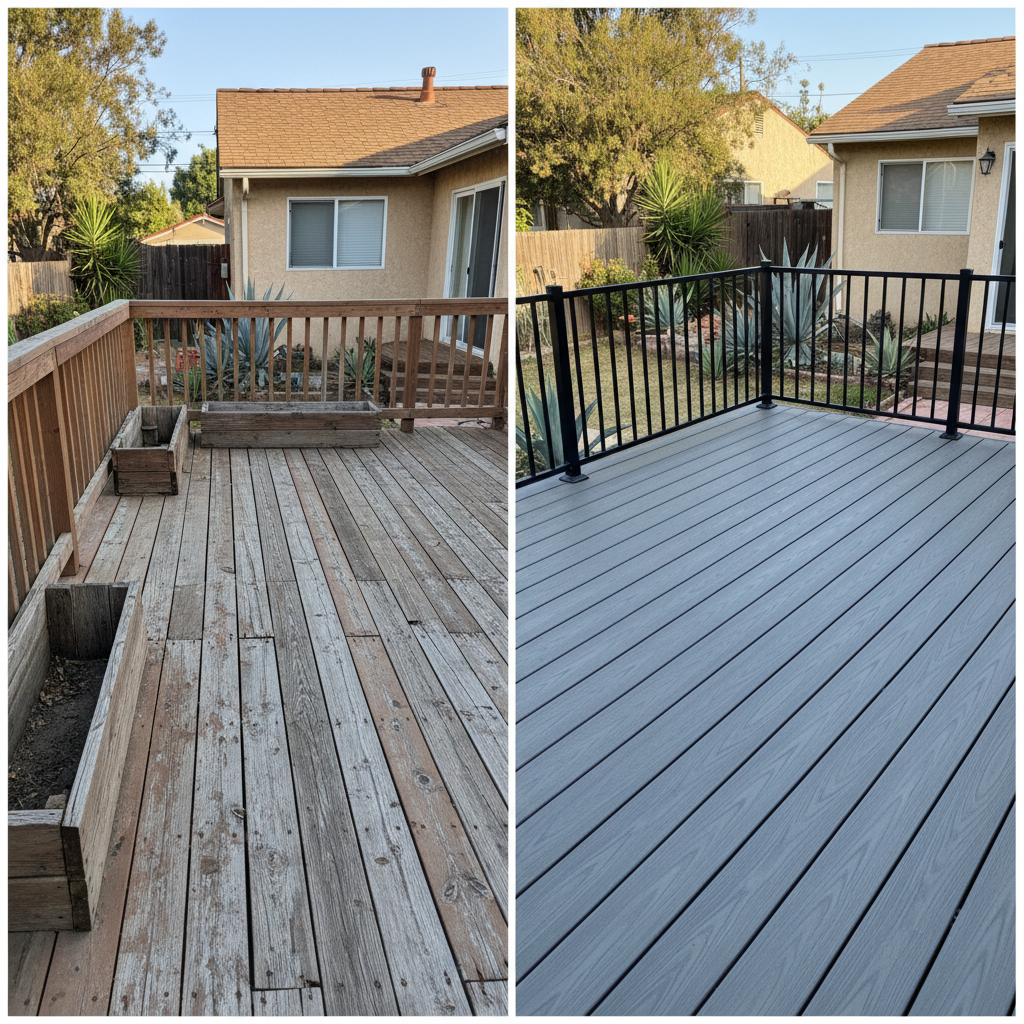
Alright, so you're looking at composite decking. Smart move. You want something low-maintenance, durable, and good-looking. But then you start digging, and you hit this 'capped versus uncapped' thing. What's the deal? I get this question a lot from folks right here in Inglewood, especially with our sunny, sometimes humid weather. Let's clear it up.
What's the Difference?
It's pretty simple, really. Both types of composite decking are made from a mix of wood fibers and recycled plastic. That's what gives them their strength and keeps them from rotting like traditional wood.
- Uncapped Composite: This is the original composite decking. It's basically that wood-plastic blend all the way through. Think of it like a solid piece of material, no outer layer.
- Capped Composite: This is the newer generation. It's got that same wood-plastic core, but then it's wrapped or 'capped' on three or four sides with a durable, protective polymer shell. It's like a candy shell around a chocolate bar.
Cost: What's Your Wallet Saying?
Let's be real, cost is usually the first thing on everyone's mind. Uncapped composite is generally less expensive upfront. You're looking at a lower price per linear foot because it's a simpler manufacturing process. It was a game-changer when it first came out, offering a step up from wood without the constant sealing and staining.
Capped composite, on the other hand, will cost you more initially. That extra protective layer adds to the manufacturing expense, and that gets passed on to you. But don't just look at the sticker price. We'll get into why that upfront cost might save you money in the long run.
Durability: Standing Up to Inglewood Life
This is where capped composite really shines, especially for us here in Southern California. Our sun is no joke, right? And while we don't get a ton of rain, those occasional downpours and the general humidity can still do a number on materials.
Uncapped composite, because it's exposed, can be more susceptible to fading from UV rays. It can also absorb moisture, which can lead to mold or mildew growth, especially in shaded areas or if you've got a lot of trees dropping leaves on your deck. It's also more prone to staining from things like spilled BBQ sauce or red wine. I've seen uncapped decks in older parts of Inglewood, near the Forum, that have definitely shown their age over the years, fading unevenly and holding onto stains.
Capped composite? That polymer shell is a fantastic shield. It's designed to resist fading, staining, scratching, and moisture absorption. This means it's going to look newer for longer, even with our intense sun beating down on it day after day. It's much tougher against spills and environmental wear.
Maintenance: How Much Work Do You Want to Do?
This is probably the biggest reason people choose composite in the first place: less work. Both types are way easier to maintain than wood, but there's still a difference.
With uncapped composite, you'll still need to clean it regularly to prevent mold and mildew, and you might find yourself scrubbing harder to get out stains. Some folks even try to power wash it, but you have to be super careful not to damage the material.
Capped composite is practically set-it-and-forget-it. A simple sweep and an occasional wash with soap and water is usually all it takes. That protective cap means stains wipe right off, and mold has a much harder time taking hold. You won't be spending your weekends cleaning or worrying about fading.
Appearance: What Look Are You Going For?
Early uncapped composites often looked a bit more 'plastic-y' and less like real wood. They typically came in solid colors and didn't have as much variation. Over time, they could also show scuffs and wear more visibly.
Modern capped composites have come a long, long way in terms of aesthetics. Manufacturers can create incredibly realistic wood grain patterns, multi-tonal colors, and even wire-brushed textures that really mimic natural wood. The color also stays more consistent over time thanks to that cap. You can get some truly stunning looks that will enhance your backyard oasis.
My Recommendation for Inglewood Homeowners
Look, if budget is your absolute top priority and you're okay with a bit more maintenance and potential fading, uncapped composite can work. But honestly, for most homeowners in Inglewood, especially if you plan on enjoying your deck for years to come, I strongly recommend capped composite decking.
The slightly higher upfront cost is almost always worth it for the superior durability, fade resistance, stain protection, and drastically lower maintenance. When you factor in how much longer it'll look great and how little effort you'll put into it, the value is undeniable.
You want a deck that stands up to our California sunshine, handles the occasional backyard party spill, and still looks fantastic for years without you breaking your back. Capped composite delivers on all those fronts. It's what we primarily install here at Inglewood Deck Creations because we know it's going to make our customers happy in the long run.
Don't just take my word for it, though. Come by, check out some samples, and see the difference for yourself. Your outdoor living space deserves the best.